
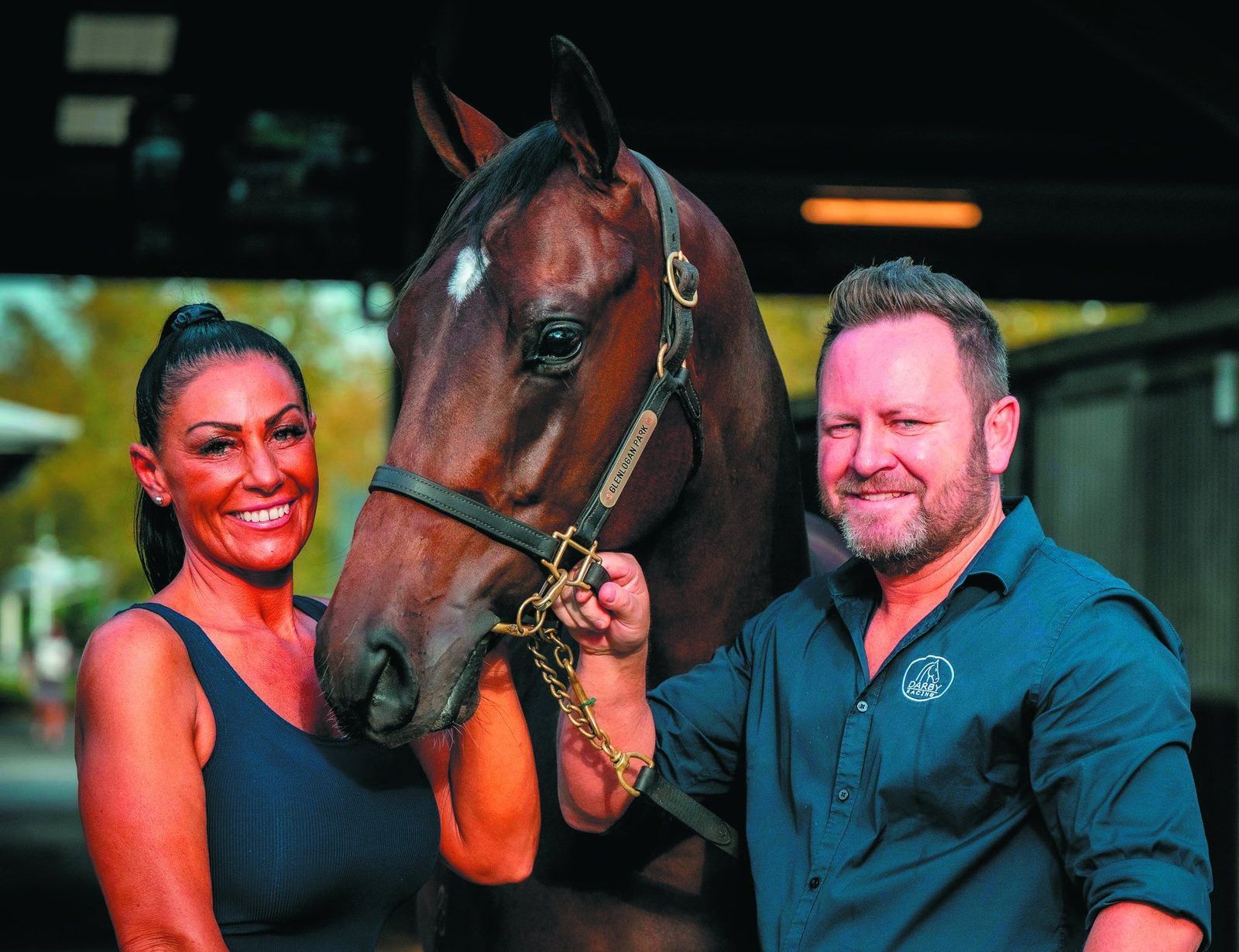
Scott Darby
A day at the races with a friend led Scott Darby to discover horse racing. Time spent working for Clarry Conners meant meeting Tierce and Burst and resulted in a lifelong obsession with the Golden Slipper. Fast forward to 2026 and Darby Racing has had nine runners in the Golden Slipper, winning it with She Will Reign.
 |
Scott Darby, of Darby Racing Syndications, has no family history in horse racing. All his connections came through friends. “I started riding horses when I was about 10 or 11 at a friend’s farm. They had horses and my first introduction to horses was trail riding.” “I didn’t know anything about horse racing until the age of 16. In year 10, a friend of mine was right into it and his father invited us to the races and we took our $20 to the races and the rest is history.
That was my entry point. It married up the love of horses and punting. Once I got into racing, I just fell in love with it.” There was never a targeted plan to become a syndicator. But of all the things in racing, it was best suited to Darby’s personality.
“I was always going to be in business. Mum and Dad opened a pizza shop for us kids, because I quit my apprenticeship and my older brother quit university and they were very concerned about us. They opened a franchise and we were doing delivery driving, and I was working for Clarry Conners in his stables as a stablehand on and off. But I stuck with the pizzas because it was better to be working at night than it was at 3 o’clock in the morning.
“Racing was my love. Every moment I could, I’d be on the computer looking at breeding, and then I worked for some horse breakers in between working at the pizza shop.” “I bought some shares in a few horses. The paper used to have the Horse, Vehicle and Livestock section, little ads in columns that would say ‘Eight partners wanted,’ and so I raced a number of horses on lease that way. “That’s how I fell into syndication.
I was working for a horse breaker and he went to the Scone sale and he came back to the farm with a Song Of Tara filly. She was tiny, 14.3hh and I said, ‘What are you going to do with that?’. He said he would break her in and get partners into her, and I thought of the little ads in the paper and said, ‘I’ll help.’” Darby told him about the ads in the paper and the breaker told him to put the horse into eight shares and he could keep two for himself.
“I sold the whole eight and thought that was pretty easy. I didn’t know you needed a license. You may not have needed a license back then, it was a long time ago.” One horse doesn’t make a business though and Darby went back to the pizza shop, until another horse, a different person, and another opportunity to sell popped up a few years later. For a long time, his focus was the pizza shop with horses as his hobby on the side.
“I wouldn’t say talking and selling is my forte, but I’m a bit of a go-getter. I still wasn’t thinking I could do this full time, but we became friends and we started to look into the whole process. I got a license and got out of the pizza shop and started Darby Racing. It was the year the Equine Influenza hit.” The Equine Influenza crisis happened in 2007 and it was around then that Darby Racing turned from a part-time dream into a full-time business.
“It was a leap of faith. I fell into syndication and I think many people fall into a profession they never thought of. If they enjoy it, then they turn it into their own business. I was in love with racing. I still remember the days of going to Rosehill and the smell of it was like a carnival, even on your normal Saturdays, just the bookies and the smell of the sausage sizzles and the colours, it was unbelievable.
 |
| Continue reading ↓ |
“I got hooked very early into the Golden Slipper.” Darby worked for Clarry Conners when Clarry had a stable filled with exciting two year-olds including Gr1 Golden Slipper winners Tierce (Victory Prince-Manx Park, by Rheingold) and Burst (Marauding-Sudden, by Boucher).
“The year I really woke up to the Slipper was the year Tierce won, then the following year Clarry had a filly called Burst. I backed her and followed her right through. From that moment, I was in love with the Slipper and it’s no secret that we headed that way in our syndication and got to win a Golden Slipper. The Melbourne Cup never interested me. It was all about the Slipper. “It’s not as big as it used to be.
It’s still one of the biggest races, but back in that era, racing was all about the Melbourne Cup and the Golden Slipper. “In our first year of syndicating, we had a Beautiful Crown filly that we paid $15,000 for. She ended up winning the Gimcrack. She didn’t stop there. She went down to Melbourne for the Inglis race and got hemmed in on the fence behind Starspangledbanner. Then Clarry backed her up into the Maribyrnong Plate, she was a pretty tough two year-old.” Named Our Joan Of Arc (Beautiful Crown-Bright Heroine, by Bluebird), she won the Listed Gimcrack on debut, the Maribyrnong Plate-Gr3 at her third start and finished her juvenile season with those two wins from seven starts.
“I thought, geez, this is pretty easy, this syndicating game. The first year, we’ve won the Gimcrack and the Maribyrnong and she raced in the Slipper. She never won another race after that, but she was just a very good two year-old.” Our Joan Of Arc had seven more starts at three and four, and did run seventh in the Furious Stakes-Gr2. At stud, she has produced five winners. “From that point, it started to get very tough.
We got very lucky in that first year and put our name on the map but it probably wasn’t until 2016 that we really took off with a horse called Yankee Rose.” “We had some nice horses in between in that eight year period, but it was tough going and we were honing our skills because we’d pick all our horses ourselves, myself and my team. It’s not easy. You’ve got to learn a lot.
“With Yankee Rose, we finally had that Group One horse, that special horse that we’d been looking for. We’d never had a Group One horse before then. We ran second in the Slipper and acted like we’d won the Slipper with Yankee Rose. I think they put the camera on us because we were going off.” Yankee Rose (All American-Condesaar, by Xaar) was a $10,000 purchase at the Inglis Classic Yearling Sale. She won her first two starts including the Golden Gift, then was second in the Golden Slipper-Gr1, won by Capitalist with Flying Artie in third, and concluded her two year-old season with victory in the Sires’ Produce Stakes-Gr1.
“She should have won that Slipper. It was the year that the whip rule came in. Zac Purton was riding and he’d got done for the whip a few races before, and he came back to scale and said ‘I’m really sorry about that. I was very hesitant to go for it and I found the more I hit her, the more she went but the whip rules were really playing on my mind.’ We thought we’d won anyway, and lo and behold, the next year we won it with She Will Reign.” Yankee Rose was disqualified from the Flight Stakes-Gr1 but bounced back to win the Spring Champion Stakes-Gr1.
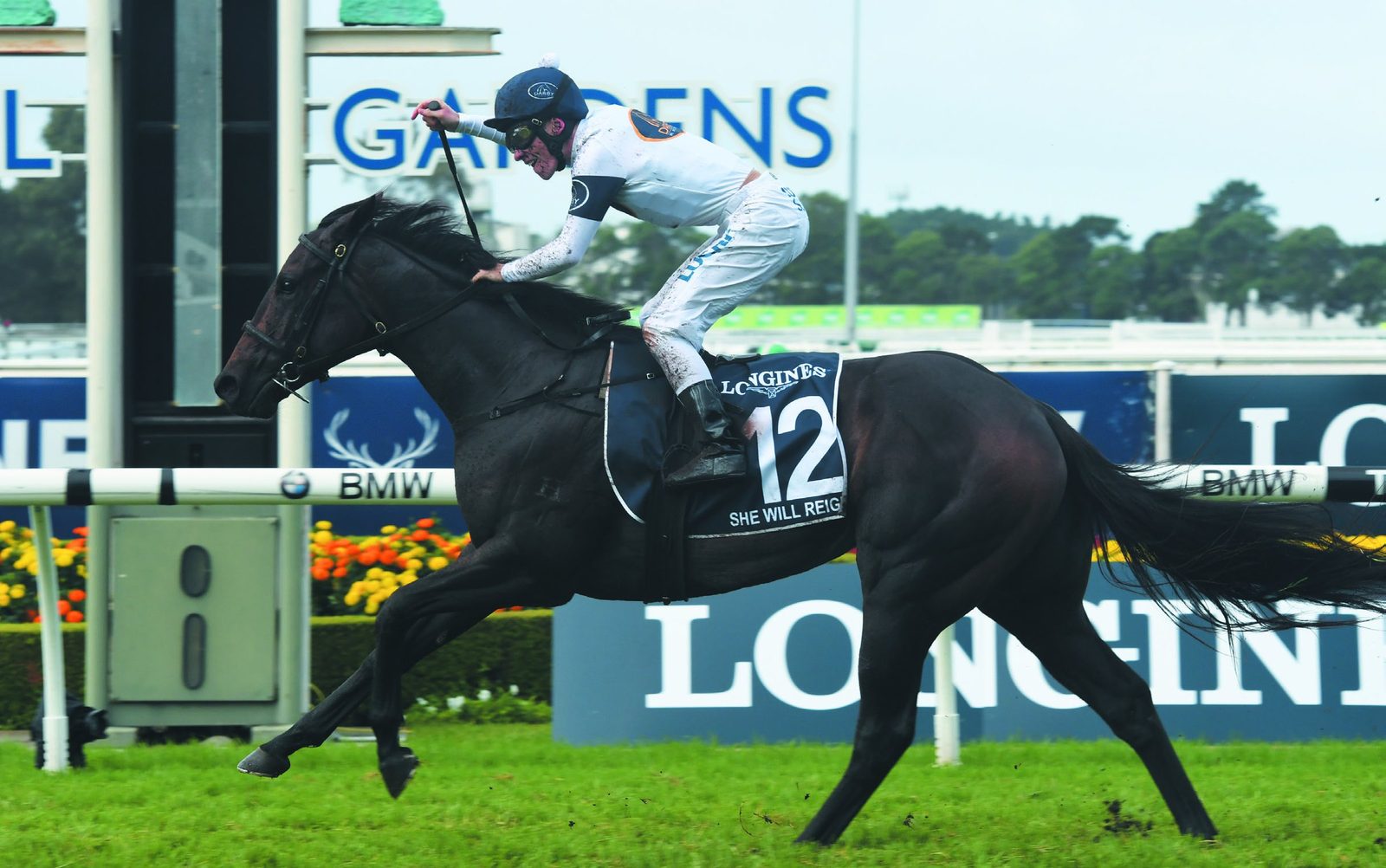
She also ran third in the Cox Plate-Gr1 as a three year-old. She was sold to Japan for $2 million where she is the dam of Triple Tiara winner, and four-time Group 1 winner Liberty Island (Duramente). Another cheap purchase, She Will Reign (Manhattan Rain-Courgette, by Charge Forward) cost $20,000 from the Inglis Classic Yearling Sale. She won her first three in succession, including the Inglis Nursery-L and Silver Slipper-Gr2 then a second in the Reisling Stakes-Gr2 before she won the Golden Slipper-Gr1.
She resumed at three to win the AJ Moir Stakes-Gr1, and was again sold to Japan for breeding where her first foal is Gr2-placed Danon Tornado (Heart’s Cry). “That was the catalyst for where we are today, those two years. It’s easy to think that we fluked it with a couple of cheap horses, but the results didn’t stop. We’ve enjoyed a great run since then. Now we’ve had nine runners in the Slipper. “There’s always good value at a sale if you can forgive things.
The best way to describe a syndicator would be, particularly if you’re buying your own horses, is you’re really a talent scout, like a football team, looking to add to your team and you’ve got to find value. “We sell to the mums and dads and you’ve got to really hone in and sometimes pick an unfashionable stallion. We predominantly try and buy types or athletes, then pedigree second, but it’s not easy. “It’s really rewarding when you put a lot of work into your selection process and it comes up trumps.
We’re talent scouts, managers of horses and managers of people. “Currently we have about 120-140 horses with 60 or 70 racing at any one time, depending on the time of year and how old they are, and we’re dealing with a few thousand clients. I’ve got quite a few staff around me, and we’ve built ourselves on a bigger numbers model. “For the first eight years, we were only doing eight to twelve horses a year, until we realised that it is a numbers game.
Yes, we got better at what we selected but we also increased our numbers. It’s very risky because you’ve got to be able to sell them. “People don’t understand the risk. There’s no insurance if a horse goes amiss and it’s still healthy enough to be a horse but isn’t going to be a racehorse. And if a horse gets injured, depending on the severity, it makes it harder and harder to syndicate, so you’re going to get left with the horse.
“If you’ve been doing it long enough, you build up your tolerance for risk.” Overpass (Vancouver-Walkway, by Exceed And Excel) was a $75,000 purchase at the COVID-affected Inglis Easter Yearling Sale, and he’s earned $12.7 million from his ten wins, and taken the team to Royal Ascot where he ran third in this year’s King Charles III Stakes -Gr1(formerly the King’s Stand Stakes). Another cheap purchase was Gr1 Winx Stakes winner Samadoubt (Not A Single Doubt-Isadora, by Gold Fever) who cost $40,000 at Inglis Classic Yearling Sale.
Coolmore Stud Stakes-Gr1 winner Ozzmosis (Zoustar-No More Tears, by Darci Brahma) was more expensive, costing $250,000 at the Magic Millions Gold Coast Yearling Sale. Recently the team at Darby Racing have made headlines with digital purchases of tried horses thanks to Newmarket Handicap-Gr1 winner Caballus (I Am Invincible-Calming Influence, by Commands). They paid $315,000 for him via Inglis Digital when he was a maiden winner, and he now has seven wins and earnings over $2.4 million.
“We buy predominantly yearlings then ventured off quite some time ago into the European market. Probably the last few years with the rise of the digital platforms, there have been some great opportunities to purchase well-bred horses or well credentialled horses. You’ve got a lot of big players that are really looking for the stallion and they’ll pay top dollar. “Caballus would be a great example that we’ve got that’s a Group One winner for us.
He was purchased by Coolmore for $1 million and he’d had five starts for one win, but they realised he wasn’t going to make it at their top end. They’re quite happy to sell. “To the novice person, they think, if they are selling then the horse is no good, but they don’t realise that for those organisations, there’s a big gap between buying a midweeker or a Saturday horse, even a low-level stakes horse, compared to looking for the big Group One.
“The model we’ve gone by is to source them from the bigger players, the ones that are looking for the elite of the elite, knowing that they’re lightly raced, they’re well bred, and they are horses we could never afford at the yearling sales. And we’ve had a lot of luck. “Bjorn Baker’s been very good with the tried horses in turning them around. A horse like Robusto, who was completely still racing well for Chris Waller, we saw him as an opportunity to buy a ready-made Saturday grade horse that you can win a few Saturday races.
Bjorn turned him into a $2 million winner in the first preparation which surprised everyone.” What advice would Darby give to someone wanting to get into syndication? “Really study the risks involved. People see you buy a horse for $100,000 and syndicate it for $160,000 and think that’s $60,000 in easy profit, but the reality is that it’s $10,000 profit. It looks wonderful on the outside, it looks all champagne and going to the races every day.
“It’s very handy to have foundational horse experience. My sales manager and right hand man grew up in racing and horse breaking and we came through selecting horses together. If you want the repeat business, you have to treat every horse like adding to your team.” It’s not just about being able to sell shares, staying in business in the long term means finding those headline horses.BB